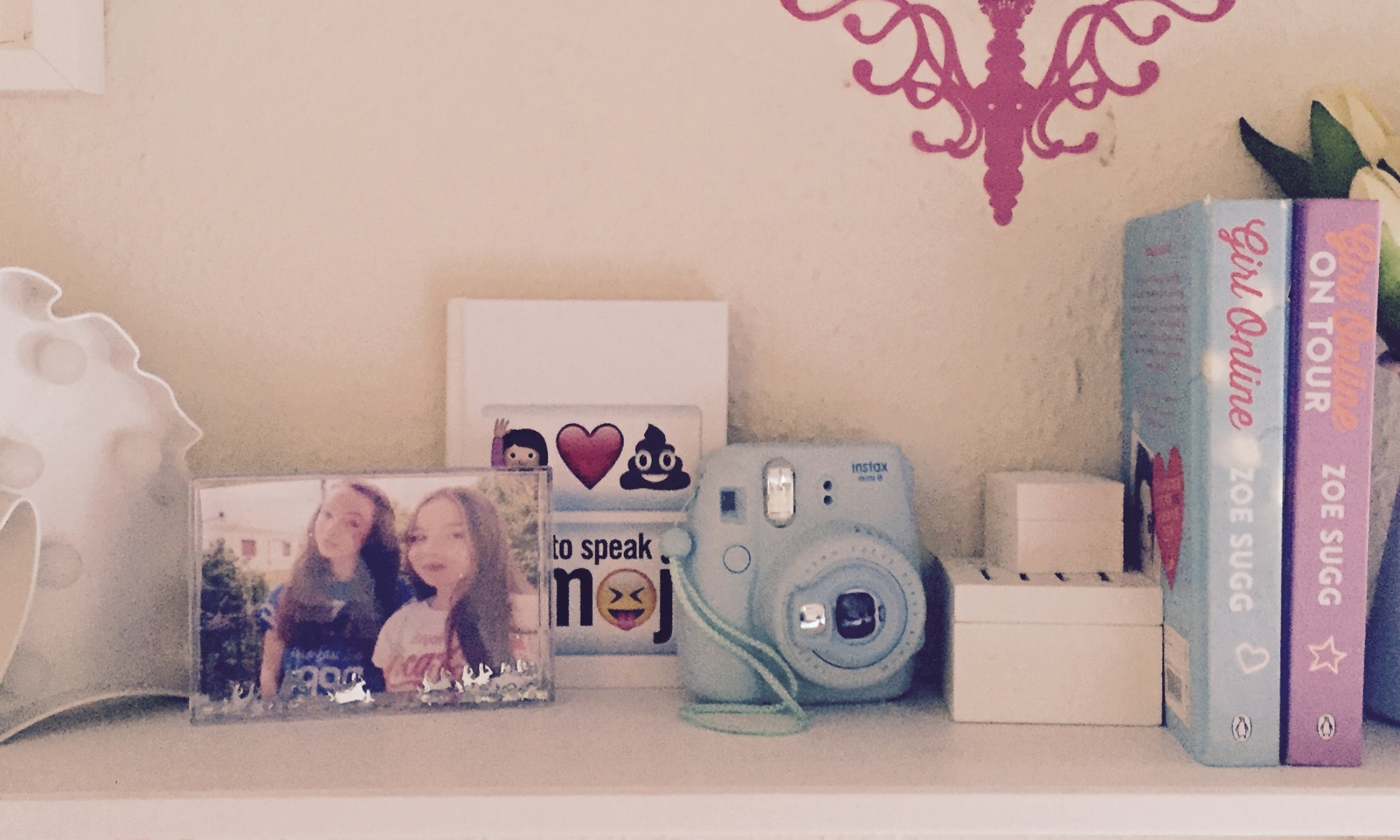
You never forget your first book

My daughter has “discovered” reading. She has found her “first book”. The book in question is Girl Online by Zoe Sugg (aka Zoella). It’s not a literary classic, but a good read, an engaging novel and my daughter loves it, because she loves anything to do with Zoella.

When I say she’s discovered, I don’t mean she’s just started reading.  She’s 11 – and she’s never had problems with reading either, BUT she’s never engaged. She’s never been even remotely interested or excited about reading…until now.

Continue reading “You never forget your first book”

Tips for Grandparents: making the most of video calls!

For many grandparents with grandchildren living too far away for Sunday lunch or weekly tea time, a weekly, fortnightly or monthly video call with the grandchildren is the most likely contact.

With mobile technology and the internet, it’s easy and cheap to have regular catch ups via Facetime, Skype, Whatsapp, Facebook video call, so it’s pretty easy to stay in touch and feel like you’re a virtual part of your grandchildren’s lives, even if you’re not physically nearby.

Sometimes, however, calls and video calls can be quite hard – for both parties – and you might need a little help making the most of those precious catch-ups. Continue reading “Tips for Grandparents: making the most of video calls!”

Storytime is vital for reading development

Bedtime stories are an integral part of a young child’s life all over the world, in every culture.  No matter what language you speak or where you live, or even if you don’t have access to books, bedtime stories have been practised since time immemorial. Wondrous World books have been developed specifically to help with reading development, as well as simply to provide gorgeous, personalised adventures that will become story time favourites. Continue reading “Storytime is vital for reading development”

20 basic life skills all kids should know by 16!

In this digital, convenience-centric and consumable age, children are spending more and more time in front of screens and less time with parents, learning manual, useful life skills that will help them to live independently (hence they don’t leave home until they’re well into their 20s or later!). We need to address this situation!   Continue reading “20 basic life skills all kids should know by 16!”

The art of doing nothing: basic steps

Today, Feb 24th, is “officially” International Do Nothing Day.  Today we have an official excuse to take a breather, relax, put up our feet and do nothing… Want to know how to do this?  Continue reading “The art of doing nothing: basic steps”

Would you pretend to be childless for a job?

How discrimination against working mums is still rife

A recent news item revealed that mums looking to go back to work have been told to leave out maternity leave from their CVs to give them a better chance of getting a job. Continue reading “Would you pretend to be childless for a job?”

How to live a “cleaner” family life

Over the last century it’s thought that over 80,000 chemicals have been introduced into our daily lives. They are toxic and they are everywhere… in the atmosphere, in our cleaning products, in food and drink, cans and bottles, in our toiletries, furniture, toys, clothes, house paint, drinking water and even in our computers. We actually even make toxins ourselves through our own stress. Continue reading “How to live a “cleaner” family life”

Are your parents up to the job of carer?

And have you agreed the boundaries?

One in four grandparents are looking after their grandchildren on at least a part-time basis. They have become a generation of carers. With the cost of child care, the lack of places, and if you have a parent who’s retired, willing and available to step up to the task, it’s easy to jump in and accept their offer to “help out” without thinking the situation through completely.  Continue reading “Are your parents up to the job of carer?”

Don’t let books become extinct!

Get your child to pick up a book today.

International Children’s Book Day (today, 2 April) celebrates the wonder of children’s books everywhere. The day is designed to inspire children to pick up a book and get reading. We desperately need that inspiration these days, as children are far more inclined to pick up an iPad or iPhone and start playing Crossy Road or Flappy Bird than pick up a book and start reading.

April the 2nd was chosen to mark this day for young literature lovers, because it’s Hans Christian Andersen’s birthday. Andersen was the author of many famous children’s stories, fairy tales and poetry, like “The Little Mermaid”, “The Tinderbox”, “The Ugly Duckling”, “The Snow Queen”, “The Nightingale”, “The Emperor’s New Clothes” and many more. His stories have inspired plays, ballets, and both live-action and animated films.

Organised by the International Board on Books for Young People (or IBBY), the aim of International Children’s Book Day is to promote books and reading to young people and this is becoming increasingly important.

Not only are children losing interest in books, but so are adults, and the book industry is in a very difficult place. Much like the media, everything is going online; bookstores are under threat, with chains such as Borders already falling victim. Books are no longer treasured like they were, and they seem to have become largely disposable items.

It was sad to see recent news that a library in East Bay, Alameda in the USA had been criticised for putting 100,000 books into the trash. Not even the recycling either, but the regular trash!

While angry residents showed up at a special meeting to express their outrage, the Alameda County library director said they just wanted newer, updated books.

She said about 172,000 books had been discarded over the past two years, due to the need for more shelf space after spending about $3 million on new books.

While some of these books may have been extremely tatty, most would have been gratefully received at local schools, child care centres, preschools, infant schools, family day care centres, playgroups and crèches.

So let’s put a little more thought back into books this month. Give gadgets and TV the heave-ho for 30 minutes a day. Encourage children to pick up a book for this time instead. Do this every day for the whole of April if you can.

Many kids aren’t natural bookworms, but once they find a book they enjoy and get into the habit of reading, they start to really enjoy it. Sometimes it just takes a little encouragement.

Set up a household competition with your kids – give them an incentive to get reading. If they’re too little to read themselves, read to them or encourage them to look at the pictures and flick through the pages for half an hour a day.

If you have any old children’s books you don’t want, that have been grown out of or that you simply don’t have space for, don’t put them in the bin! There will be a charitable organisation, child care centre, preschool, playgroup or crèche near you that would love to have them.

Published for CareforKids.com.au on April 2 2015.  http://www.careforkids.com.au/newsletter/2015/april/1/reading.html

Is your job worth the cost of child care?

Originally written for CareforKids.com.au: http://www.careforkids.com.au/newsletter/2015/february/11/perspective.html

According to a recently publicised survey in the UK, a fifth of working parents are considering reducing their hours or giving up their job altogether because of child care costs. This is just as pertinent to Australians as it is to UK parents, as child care costs reach unachievable levels on both sides of the world and parents are being forced to make difficult decisions.

The UK survey of 1,000 parents of children aged up to 16 also found that many were planning to cut back on essentials this year, because of the financial strain of child care. And one in five said they are thinking about reducing their working hours or quitting their job.

In our own survey last year, we revealed that of the mums who had not returned to work, a fifth said this was because it simply wasn’t financially viable to do so.

Removing parents’ choice as to whether or not they continue to work after having children is not the answer for families or for the economy.

This lack of choice is due to the following key factors:

  1. The extreme lack of child care for children under two years old
  2. The cost of child care
  3. The fact that many parents feel that their children are too young for centre based or family day care under the age of two
  4. The fact that nannies in-home care still doesn’t qualify for child care benefits
  5. Operating hours aren’t flexible and aren’t meeting parents needs
  6. Slowness of employers to truly embrace the need for flexibility for
  7. both parents so that they may share the child care load.

Parents of the youngest children are most under pressure and find it almost impossible to keep up with their current work conditions and pay levels vs. child care costs.

This leads to the inescapable question for many parents: is their job worth the cost of child care? Usually this still falls on the working mum’s door, as it’s still more likely that the father has the better paid job and better career prospects. So women are still having to make the choice between career and children. This will inevitably have a trickle down effect to the Australian birth rate, because couples simply won’t be able to afford to have children.

Published for CareforKids.com.au on 11.2.15 –  http://www.careforkids.com.au/newsletter/2015/february/11/perspective.html