How to live a less toxic life


pr, copywriting & social media for small business
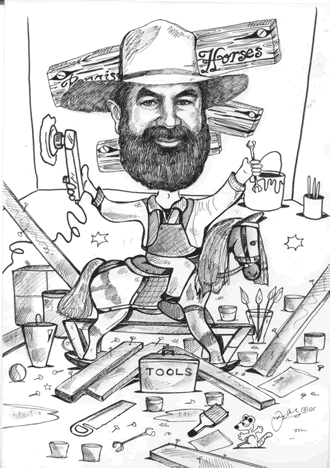

Rocking Horse Man Crafts Old School Toys To Give Philippine Prisoners New Hope
 This week I came across a truly inspirational man. Chris Woolcock is an Australian master craftsman, whose carved wooden rocking horses have received international acclaim and now fund what he calls “his most important work” – teaching his skill to prison inmates in Bilibid prison, Philippines.
Chris sells his beautiful rocking horses to clients all over the world. They have become collectors’ items, family heirlooms and exhibition pieces, having been displayed in London and New York, with one of his prize pieces currently on show at the Powerhouse Museum, Sydney. He has even been the subject of Australia’s prestigious Archibald Prize.
Chris started his career at an early age when he learned the art of woodcarving from his grandfather and developed a lifelong love of making wooden toys.
On leaving school, Chris trained to become a teacher…
View original post 548 more words


Get your child to pick up a book today.
International Children’s Book Day (today, 2 April) celebrates the wonder of children’s books everywhere. The day is designed to inspire children to pick up a book and get reading. We desperately need that inspiration these days, as children are far more inclined to pick up an iPad or iPhone and start playing Crossy Road or Flappy Bird than pick up a book and start reading.
April the 2nd was chosen to mark this day for young literature lovers, because it’s Hans Christian Andersen’s birthday. Andersen was the author of many famous children’s stories, fairy tales and poetry, like “The Little Mermaid”, “The Tinderbox”, “The Ugly Duckling”, “The Snow Queen”, “The Nightingale”, “The Emperor’s New Clothes” and many more. His stories have inspired plays, ballets, and both live-action and animated films.
Organised by the International Board on Books for Young People (or IBBY), the aim of International Children’s Book Day is to promote books and reading to young people and this is becoming increasingly important.
Not only are children losing interest in books, but so are adults, and the book industry is in a very difficult place. Much like the media, everything is going online; bookstores are under threat, with chains such as Borders already falling victim. Books are no longer treasured like they were, and they seem to have become largely disposable items.
It was sad to see recent news that a library in East Bay, Alameda in the USA had been criticised for putting 100,000 books into the trash. Not even the recycling either, but the regular trash!
While angry residents showed up at a special meeting to express their outrage, the Alameda County library director said they just wanted newer, updated books.
She said about 172,000 books had been discarded over the past two years, due to the need for more shelf space after spending about $3 million on new books.
While some of these books may have been extremely tatty, most would have been gratefully received at local schools, child care centres, preschools, infant schools, family day care centres, playgroups and crèches.
So let’s put a little more thought back into books this month. Give gadgets and TV the heave-ho for 30 minutes a day. Encourage children to pick up a book for this time instead. Do this every day for the whole of April if you can.
Many kids aren’t natural bookworms, but once they find a book they enjoy and get into the habit of reading, they start to really enjoy it. Sometimes it just takes a little encouragement.
Set up a household competition with your kids – give them an incentive to get reading. If they’re too little to read themselves, read to them or encourage them to look at the pictures and flick through the pages for half an hour a day.
If you have any old children’s books you don’t want, that have been grown out of or that you simply don’t have space for, don’t put them in the bin! There will be a charitable organisation, child care centre, preschool, playgroup or crèche near you that would love to have them.
Published for CareforKids.com.au on April 2 2015. http://www.careforkids.com.au/newsletter/2015/april/1/reading.html

For Ere Perez Naturally Beautiful blog…

Originally written for CareforKids.com.au: http://www.careforkids.com.au/newsletter/2015/february/11/perspective.html
According to a recently publicised survey in the UK, a fifth of working parents are considering reducing their hours or giving up their job altogether because of child care costs. This is just as pertinent to Australians as it is to UK parents, as child care costs reach unachievable levels on both sides of the world and parents are being forced to make difficult decisions.
The UK survey of 1,000 parents of children aged up to 16 also found that many were planning to cut back on essentials this year, because of the financial strain of child care. And one in five said they are thinking about reducing their working hours or quitting their job.
In our own survey last year, we revealed that of the mums who had not returned to work, a fifth said this was because it simply wasn’t financially viable to do so.
Removing parents’ choice as to whether or not they continue to work after having children is not the answer for families or for the economy.
This lack of choice is due to the following key factors:
both parents so that they may share the child care load.
Parents of the youngest children are most under pressure and find it almost impossible to keep up with their current work conditions and pay levels vs. child care costs.
This leads to the inescapable question for many parents: is their job worth the cost of child care? Usually this still falls on the working mum’s door, as it’s still more likely that the father has the better paid job and better career prospects. So women are still having to make the choice between career and children. This will inevitably have a trickle down effect to the Australian birth rate, because couples simply won’t be able to afford to have children.
Published for CareforKids.com.au on 11.2.15 – http://www.careforkids.com.au/newsletter/2015/february/11/perspective.html

Parents are increasingly coming under fire for parenting styles.
Hands up who sometimes feels they’re not quite up to the mark on the parenting front? Hands up who has actually been told that by a family member, colleague, friend or even by someone at the school gate who is essentially a total stranger?
It would be interesting to be able to see how many of you haven’t put up your hands. I imagine it’s very few. Much like the public view that every pregnant woman’s bump is open to touching and stroking by total strangers, there seems to be a growing trend that allows people to think they can criticise parents on the job they’re doing, no matter whether they know them or not.
I have indeed in the past been told, even by my own dear father, after a few wines at Sunday lunch, that I’m doing “a crap job” at bringing up my daughter. This was sparked by her unwillingness to eat her peas and my unwillingness to make her. Personally I prefer to save my energy and pick my battles. But what gives my Dad the right to think he can say that? Presumably his own parenting perfection…ahem.
Parents these days are constantly being picked up on aspects of parenting, and it’s not just by their parents either. It’s apparently by anyone and everyone. Even the talented, beautiful Australian actress and mum, Cate Blanchett, who by the way doesn’t employ a nanny or cook apparently, says she feels criticised for her parenting by other mums! This is not isolated. Our 2014 Annual Childcare and Workforce Participation Survey revealed that 57 per cent of mums had felt stigmatised as a bad parent (for either working or staying at home) by other mums. So what happened to the sisterhood?
Whether it’s for their children’s eating habits, gaming, noisiness, dress sense, vocabulary, table manners, bedtime, supermarket etiquette, attitude, it’s all fodder for other people’s comments. And however you parent, it’s never right or good enough for some people.
Personally I like to hide behind the thought that these dissenters are generally bored, unhappy, unfulfilled or just generally not very nice.
A recent article by Queensland University’s John Pickering, a self-confessed non-parent, highlighted the “growing and seemingly widespread view that parents these days aren’t doing a good job – that in fact they’re doing a “crap” job”. So it’s not just me, then!
He goes on to say that parents are being told they “are out of touch and too soft. They give in to their kids too easily. They’re over-involved helicopter parents, or under-involved don’t care parents. Or they could be bulldozer or lawn-mower parents (the ones who smooth the way for their child’s transition through life and make life difficult for everyone else in the process).”
As Pickering points out, this criticism is simply the “kids these days rhetoric, but applied to parents”. And of course the world is very different to how it was “in their day”. Particularly when it comes to working families.
When I grew up, working mums were in the minority. I can barely recall any of my friend’s mums working full time. Nowadays it’s almost the reverse. It’s not just due to a need or desire to be career woman either; it’s also a matter of economics.
In our parents’ day, you could very easily afford to buy your own house and pay a mortgage on one average salary. Today that is almost impossible. And this surely has to affect our way of parenting. We’ve had to adapt. But more to the point, what are we consciously doing that’s different out of choice as opposed to necessity?
Pickering’s article gives an overview of a 2012 study surveyed thousands of English adolescents in 1986 and again in 2006 to determine the extent that parent-child relationships had changed over 20 years:
The study showed that parental monitoring of youth behaviour and parent-child quality time increased from 1986 to 2006. Parents in 2006 also expected more from their children than they did in 1986, including the expectation of being polite.
The authors concluded that their study failed to provide any evidence that the quality of parent-child relationships had declined over time, and that there is little evidence of any decline in parenting across the target population.
This finding corroborates earlier studies, which analysed parenting patterns across generations and found that both mothers and fathers tended to spend greater amounts of time in child care-related activities in the 1990s than they did in the 1960s.
The major trend, says Pickering, is the appetite for evidence that informs decisions about parenting. Parents want evidence that what they are doing is effective.
“They invest time to research whether vaccines work; to find evidence that “breast is best”; evidence that car seat A is superior to car seat B; evidence that certain toys are developmentally appropriate; evidence that the discipline strategies they use are effective.”
Pickering believes that the physical, emotional, financial and intellectual resources that parents are now investing in raising their kids have never been greater.
We don’t get everything right. And none of us is perfect.
Regardless of what we’re doing differently, the vast majority of parents are simply doing the best they can in the only way they know, and we should stop criticising and start to be more supportive.
After all, two of the key things a parent can teach their child are compassion, and self-control.
To view James Pickering’s article in full, click here.
Originally published on Feb 18 2015 for CareforKids.com.au: http://www.careforkids.com.au/newsletter/2015/february/18/parenting.html

Sunflowers are grown all over the world and are a hugely important and valuable agricultural commodity. They are incredibly beautiful and there’s nothing like driving through the country when it’s sunflower season, with fields as far as the eye can see of these gorgeous yellow flowers that give the impression they’re turning their heads to the sun – hence their name in French (tournesols) and Spanish (girasoles). Continue reading “All hail the sunflower, king of the good oils”
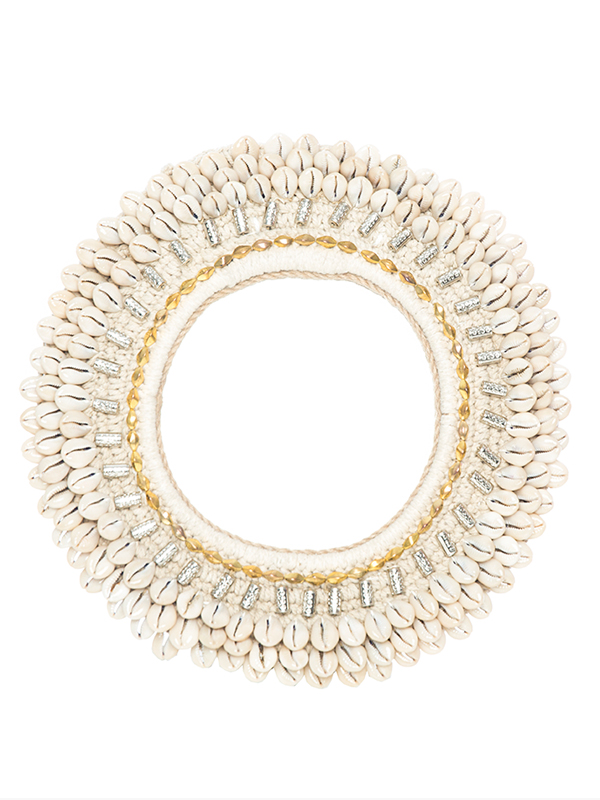
Perfect as gifts or for your own home, Gypset Cargo’s stunning collection of hand-made shell and brass-beaded mirrors will bring coastal chic and “boho luxe” to every space.
Mirrors are not just functional; they can also be stunning pieces of wall art and a real focal point, bringing style and substance to living rooms, bathrooms, kitchens and hallways.
Gypset Cargo’s mirrors combine the understated style and sophistication of Cape Cod with the breezy, bohemian coastal chic of Byron Bay.
They are all unique, designed by Jillian Middleton and lovingly handcrafted in Bali by Indonesians artisans. The shells are laid with painstaking precision and trimmed with gold and brass beading. The collection has an additional feature of the Cape Cod Wall Cross – a beautiful piece of wall art in the same style and materials as the mirrors.
The collection includes:
Love Heart Mirror – a beautiful and colourful heart-shaped mirror featuring coloured shells in pinks, mauves, off white and salmon. The perfect gift for the one you love or great as a wedding present.
Rectangular Mirror – White, off, white and mauve shells with rope and brass beading, this mirror is incredibly beautiful and perfect for bedrooms.
East Hampton Mirror (in small or medium sizes) – White and salmon coloured shells, trimmed with brass beading.
Medium Bridgehampton Mirror – A triple layer of off-white shells with gold and brass beading.
Cape Cod Wall Cross – you don’t have to be religious to appreciate the beauty of this unusual piece of wall art. In white shells with brass beading it’s the ultimate piece of coastal chic.
Gypset Cargo epitomises the “bohemian luxe” of the gypset with a handmade range of stunning pendants, chandeliers and mirrors. All the pieces are lovingly crafted from natural, recycled or sustainable materials, with every aspect handpicked with Jillian’s keen stylist’s eye for detail.
All pieces are made and embellished with materials such as individually stamped beading from coconut shells, discarded shells from the ocean, farmed shells, wood, abaca vine, rattan (cane) and even fishing line.
Jillian designs all her pieces, which are then hand made by talented artisans in Bali using local materials.
Perfect as gifts or for your own home, Gypset Cargo’s stunning collection of hand-made shell and brass-beaded mirrors will bring coastal chic and “boho luxe” to every space.
Mirrors are not just functional; they can also be stunning pieces of wall art and a real focal point, bringing style and substance to living rooms, bathrooms, kitchens and hallways.
Gypset Cargo’s mirrors combine the understated style and sophistication of Cape Cod with the breezy, bohemian coastal chic of Byron Bay.
They are all unique, designed by Jillian Middleton and lovingly handcrafted in Bali by Indonesians artisans. The shells are laid with painstaking precision and trimmed with gold and brass beading. The collection has an additional feature of the Cape Cod Wall Cross – a beautiful piece of wall art in the same style and materials as the mirrors.
The collection includes:
Love Heart Mirror – a beautiful and colourful heart-shaped…
View original post 226 more words

Wondrous Ink’s personalised children’s book “Wondrous World” is an inspiring and heart-warming children’s story that uses each letter of the child’s name to show them why they are so special and unique in the world.
Wondrous Ink books are perfect as gifts, but also as fundraisers and education tools for child care centres and pre-schools and infant schools.
During the story children help a host of colourful characters in different ways, discovering something new about themselves with each interaction, until at the end they realise those same qualities actually spell out their very own name.
More Than Just A Name
What sets Wondrous Ink books apart from other personalised children’s name books is they not only highlight the child’s name, but also give the child an insight into his or her different personality traits and what makes them who they are. They learn about their name, but also…
View original post 240 more words

