Single Parents Share the Load

…of child care and household bills

The latest labour force statistics from the Australian Bureau of Statistics form the last census say that in June 2012, there were 641 thousand one parent families with dependants, and most (84%) were single mother families.

In half (50%) of one-parent families with dependents, the age of the youngest child was between 0 and 9 years old. Managing home and work life with young children is physically, emotionally and financially hard enough hard enough if you’re in a relationship with a supportive partner. Imagine what it’s like on a daily basis when you’re completely on your own.

So it’s not surprising that many single mums are teaming up with likeminded single parents to share the load of household bills, chores and child care.

If you Google “single parent required for house share” you get a whole raft of Gumtree ads; house share sites; mums forums; single parent forums and general accommodation sites, all with the same thread: Single parents (mainly, but not exclusively mums) looking for similar lone parents to share the burden of household duties, bills and rent.

The cost of living is increasing, everywhere. Australia has a particularly high cost of living and both sales and rental prices for property are sky high. For many dual income families, the cost of property is almost impossible, so it’s even more untenable when you’re suddenly having to cover it all yourself and not between you and a partner.

The fact is that you can get a much nicer place if you double your budget and buddy up with someone else, but it’s not that easy when you’re a single parent with one or more small children in tow.

Many women have friends they can do this with, but if you’re new to a city or area and don’t have any friends in a similar situation to you, then you have to put yourself out there.

Not all mums have support, financially or otherwise, from their former partner, or from their family. They need help paying the bills; they’d like a bit of friendship, support and company for both themselves and their child. There are some dads, but generally speaking they only have their kids at the weekends but are happy to muck in at other times.

Sydney based Sophie Andrews suddenly found herself and her two-year-old daughter in an accommodation dilemma when she split from her partner.

A close friend had also separated from her partner at the same time and the two friends found themselves living in rental properties that neither could afford.

The only alternative either of us could afford individually was a tiny 2-bedroom apartment. So they joined forces and were able to rent a huge 4-bedroom house with a lovely garden. The rent split between them was $100 a week less than if they had each moved into that tiny flat separately!

“By pooling our resources, we could not only afford to live in a house that was way beyond our means individually, but there were other benefits which contributed hugely to improving those first couple of years of separation”, Says Andrews.

Sophie recognised that having a friend in a similar situation was very lucky, but that most women were not in such a fortunate position. She founded SPACE4.com.au, a website dedicated to providing single parents with alternative living arrangements and childcare assistance at what is usually a very lonely and financially difficult time.

SPACE4 has been running for seven years and is Australia’s leading single parent site for house share, friendship, holiday share & childcare exchange. It offers an online database of single parents, looking to either share a house with another single parent, or to contact other one-parent families in their area with a view to sharing childcare and babysitting duties.

Members simply go through potential member matches by searching the profiles and contacting any prospective parents by email. It’s a great way to look in a secure environment where everyone is looking for the same thing.

Regardless of circumstances, it’s good to know you’re not alone. There are thousands of other single parents out there in the same position as you.

For more information on your child care options and benefits available to single parents, click here to see our article, and for information on single parent accommodation and lots of other issues, go to:

www.space4.com.au

www.singlemotherforum.com/

www.pwpaustralia.net

www.singlemum.com.au

UK:

http://www.movethat.co.uk/London/Forum/Single_Parents/

http://www.spareroom.co.uk

http://www.netmums.com

Written and published for CareforKids.com.au http://www.careforkids.com.au/newsletter/2014/october/8/share.html

Post Natal Depression and The Baby Blues

Do you know the difference and could you spot it?

Mental Health Week is a national event, which runs from Oct 5 to 12 and coincides with World Mental Health Day (10 October). The aim is to promote awareness about mental health and wellbeing, and equip people with the right information.

As part of Mental Health Week we have chosen to highlight the issue of Baby Blues and Postnatal Depression. Do you know the difference between Baby Blues and Postnatal Depression? Could you spot depression in yourself, a friend or partner? And if you did, would you know what to do about it?

Being pregnant and giving birth and all that it entails is a hugely emotional and life-changing experience. Hormones are raging, our body is changing and we experience sleeplessness, anxiety, acute tiredness, tearfulness and many other symptoms, which are all perfectly normal with everything that’s going on.

For one to two weeks after giving birth, many women also experience a short period of mood swings, tearfulness, anxiety and difficulty in sleeping. This can affect up to 80% of new mums and is known as the baby blues and is thought to be linked with the stresses associated with late pregnancy, labour and delivery, along with the rapid hormonal changes that accompany the birth.

Symptoms generally settle during the first week after birth, but for some women these symptoms can carry on for much longer and may be the much more serious condition of postnatal depression. It can also affect partners of new mums as well.

So what exactly is it?

Postnatal or Perinatal Anxiety and Depression (PND) is thought to affect approximately 20 per cent of women who give birth in Australia – around 50,000 women each year, and 10 per cent of their partners.

Postnatal depression can affect women in different ways, but the main symptoms of postnatal depression are:

  • A persistent feeling of sadness and low mood
  • Loss of interest in the world around you and no longer enjoying things that used to give pleasure
  • Lack of energy and feeling tired all the time (fatigue)

Other symptoms can include:

  • Disturbed sleep, such as having trouble sleeping during the night and then being sleepy during the day
  • Difficulties with concentration and making decisions
  • Low self-confidence
  • Poor appetite or an increase in appetite (“comfort eating”)
  • Feeling very agitated or, alternatively, very apathetic (you can’t be bothered)
  • Feelings of guilt and self-blame
  • Thinking about suicide and self-harming

Left untreated, the impact on the mother, her child and other family members can be profound. Perinatal Anxiety and Depression is a recognised medical condition, the result of biological, psychological and social factors.

With celebrities such as Jessica Rowe, Gwyneth Paltrow, Courtney Cox, Brooke Shields, Elle Macpherson, Britney Spears and Marie Osmond bringing the tragic illness into the public arena on a worldwide scale, the Gidget Foundation is one of the key non-government funded organisations that work tirelessly in Australia to raise awareness of and funding for research and treatment for PND.

Postnatal depression often goes unnoticed and many women are unaware they have it, even though they don’t feel quite right, because the symptoms of are wide-ranging.

Spotting the difference between Baby Blues and PND

Mood changes, irritability and episodes of tearfulness are common after giving birth. These symptoms are often known as the “baby blues” and they usually clear up within a few weeks. However, if symptoms are more persistent, it could be postnatal depression.

Women who continue to feel “low” after a couple of weeks after giving birth, should go to see their GP to talk through how they’re feeling. The GP will ask the following two questions if they suspect postnatal depression:

  • During the past month, have you often been bothered by feeling down, depressed or hopeless?
  • During the past month, have you often taken little or no pleasure in doing things that would normally make you happy?

If the answer is yes to either question, then postnatal depression is possible. If the answer is yes to both questions, it’s very likely and the GP may ask one further question: “Is this something you feel you need or want help with?” and there is absolutely no shame in saying Yes.

Some women don’t recognise they have postnatal depression, or they choose to ignore their symptoms, because they’re afraid of being seen as a bad mother.

Of course their friends and family are always supportive and would always want to help, but many women with postnatal depression feel they can’t ask for help. It becomes a very secret illness, not unlike a chronic eating disorder. And it can build up very quickly to dangerous levels, which can sadly sometimes lead to tragic consequences if left undiagnosed and untreated.

So it’s hugely important that friends and family also know the danger signs and can act if required.

Danger signs to look out for

If someone you care about starts to show these signs try to get help for them through your local health professional. Danger signs to look out for include:

  • Talk of harming herself or the baby
  • Bizarre thoughts or speech patterns
  • Risk-taking behaviour
  • Behaviour that seems odd or is out of character
  • Severe change in mood
  • Withdrawal from all social contact
  • Extreme despair
  • Obsession with morbid ideas
  • Statements like: ‘They’d be better off without me’.

Treating postnatal depression

Postnatal depression can be lonely, distressing and frightening, but there are many treatments available. As long as it’s recognised and treated, postnatal depression is a temporary condition you can recover from.

It’s very important to seek treatment if you think you or your partner has postnatal depression. The condition is unlikely to get better by itself quickly and it could impact on the care of the baby.

Treatment for postnatal depression includes:

Read more about treating postnatal depression.

Why do I have postnatal depression?

The cause of postnatal depression isn’t clear, but it’s thought to be the result of several things rather than a single cause. These may include:

  • The physical and emotional stress of looking after a newborn baby, particularly a lack of sleep
  • Hormonal changes that occur shortly after pregnancy; some women may be particularly sensitive to these changes
  • Individual social circumstances, such as money worries, poor social support or relationship problems

The following will put you at greater risk of developing postnatal depression:

  • A previous history of depression or other mood disorders
  • A previous history of postnatal depression
  • If you experience depression or anxiety during pregnancy

Read more about the causes of postnatal depression.

Helping to prevent postnatal depression

You should tell your GP if you’ve had postnatal depression in the past and you’re pregnant, or if you’re considering having another baby. A previous history of postnatal depression increases your risk of developing it again.

If you keep your GP informed, they’ll be aware that postnatal depression could develop after your baby is born. This will prevent a delay in diagnosis and treatment can begin earlier. In the early stages, postnatal depression can be easy to miss.

The following self-help measures can also be useful in helping to prevent postnatal depression:

Read more about preventing postnatal depression and the self-help measures you can take. But the most important thing is to seek help. Talk to a partner, friend, family member or professional.

Click here for an amazing video on Dealing with Post Natal Depression from PANDA: “Behind the Mask: The Hidden Struggle of Parenthood”


Source:

NHS UK

The Gidget Foundation raises funds and awareness for perinatal. Founded by the friends and family of vivacious Sydney woman, “Gidget”, following her suicide as a result of “post natal depression”, the Gidget Foundation exists to promote awareness of Perinatal Anxiety and Depression (PND) amongst women and their families, their health providers and the wider community to ensure that women in need can receive timely, appropriate and supportive care. They have a dedicated outpatient clinic – Gidget House – in Sydney.

PANDA (Post and Antenatal Depression Association)

Black Dog Institute

Written and published for CareforKids.com.au http://www.careforkids.com.au/newsletter/2014/october/8/pnd.html

Parents: Know your rashes!

Do you know the different between a heat rash and something more serious?

Recently my sister-in-law called in a panic, because her one-year-old had been sent home from nursery with suspected chicken pox.

She was told not to return with the child until they had visited the doctor and got a doctor’s note or for a couple of weeks until the chickenpox had passed. After frantic work rescheduling and pulling in favours from family and friends, and a trip to the local GP it was found that my nephew had a heat rash and was perfectly fine to continue on at child care.

And despite said doctor’s note, the following week, the same thing happened again.

It made me wonder what is going on when an experienced child care worker can’t recognize the difference between a heat rash and chickenpox. Can anyone except highly trained medical practitioners know the difference?

Do you as parents know the difference?

It’s time to get rash savvy

Let’s face it everyone is afraid of rashes…Ever since we were all instructed to look out for the dreaded meningococcal rash, parents all over the world have gone into a mild panic at the very sight of a few spots. We get out the glasses and start doing the glass test at every tiny spot to see if it disappears or stays visible.

Most rashes are however completely harmless and will go away of their own accord. Kids get rashes all the time. They are another way of their immune system dealing with invading critters.

More often than not they are simple heat rashes or perhaps a mild allergy, but usually nothing to worry about.

However, if your child has developed a rash and seems unwell, or if you’re worried, you should see your GP to find out the cause and for any necessary treatment.

There are so many causes of rashes, but the following guide compiled by the UK’s NHS service, may give you a better idea of the cause of the rash.

DO NOT USE THIS TO SELF-DIAGNOSE YOUR CHILD’S CONDITION – always see a GP for a proper diagnosis.

A parent’s guide to recognising rashes

Here are the most common rashes in young babies:

Neonatal acne (“baby acne”)

Pimples sometimes develop on a baby’s cheeks, nose and forehead within a month of their birth. These tend to get worse before clearing up completely after a few weeks or months.

Washing your baby’s face with water and mild soap can help improve the appearance of their skin. You should avoid acne medicines intended for older children and adults.

Pimples or blackheads that develop after three months of age (infantile acne) tend to be more severe and often need medical treatment.

Cradle cap

Cradle cap is where yellowish, greasy scaly patches develop on a baby’s scalp. Occasionally, the face, ears and neck can also be affected.

Cradle cap is not itchy and should not bother your baby. If your baby is scratching or upset, they may have eczema (see below).

Cradle cap is a common condition that tends to develop within two or three months after birth. It will usually get better without treatment in a few weeks or months.

Gently washing your baby’s hair and scalp with baby shampoo may help prevent further patches developing. Read more about treating cradle cap.

Erythema toxicum

Half of all newborns will develop a blotchy red skin reaction called erythema toxicum, usually at two or three days old. It is a normal newborn rash that won’t bother your baby and will soon clear after a few days.

Miliria (“sweat rash”)

A sweat rash may flare up when your baby sweats, for example because they are dressed in too many clothes or the environment is hot and humid. It is a sign that your baby’s sweat glands have become blocked. They may develop tiny red bumps or blisters on their skin, but these will soon clear without treatment.

Other common childhood rashes


Chickenpox

Chickenpox is a mild and common viral illness that most children catch at some point. It causes a rash of red, itchy spots that turn into fluid-filled blisters. They then crust over to form scabs, which eventually drop off. Some children have only a few spots, but in others they can cover the entire body.

Learn more about the symptoms of chickenpox.

Eczema

Eczema is a long-term condition that causes the skin to become itchy, red, dry and cracked. The most common form is atopic eczema, which mainly affects children but can continue into adulthood.

Atopic eczema commonly occurs behind the knees or on the front of the elbows. It is not a serious condition but if your child later becomes infected with the herpes simplex virus, it can cause the eczema to flare up into an outbreak of tiny blisters, called eczema herpeticum, and will cause a fever.

About one in five children in the UK has eczema and many develop it before their first birthday.

Find out how to manage your child’s eczema.

Impetigo

Impetigo is a highly contagious bacterial infection of the surface layers of the skin that causes sores and blisters. It is not usually serious. There are two types:

  • bullous impetigo – which causes large, painless, fluid-filled blisters
  • non-bullous impetigo – which is more contagious and causes sores that quickly burst to leave a yellow-brown crust

If you think your child has impetigo, see your GP for a prescription of antibiotic cream, which should clear the infection within seven to 10 days.

Ringworm

Ringworm is a common fungal skin infection that causes a ring-like red rash on the skin. The rash can appear almost anywhere on the body, with the scalp, feet and groin being common areas.

Ringworm isn’t serious and is usually easily treated using creams that you can buy from the pharmacy.

Prickly heat (heat rash)

A heat rash (prickly heat) may flare up if your child starts to sweat, for example because they are dressed in too many clothes or the environment is hot and humid. They may develop tiny red bumps and blisters on their skin, but these will soon clear.

Erythema multiforme

Erythema multiforme is a skin reaction triggered by medication, an infection (usually the herpes simplex virus) or an illness. Red spots develop on the hands or feet before spreading across the body. Your child will probably feel unwell and may have a fever, but you should be able to treat these symptoms with over-the-counter medicine. It may take between two and six weeks before they feel better.

See your GP if your child has a rash and seems unwell.

Keratosis pilaris (“chicken skin”)

Keratosis pilaris is a common and harmless condition where the skin becomes rough and bumpy, as if covered in permanent goose pimples.

It typically begins in childhood and gets worse in adolescence, around puberty. Some people find that it improves after this and may even disappear in adulthood.

There’s no cure for keratosis pilaris, but it shouldn’t bother your child.

Hand, foot and mouth disease

Hand, foot and mouth disease is a common, mild illness caused by a virus. It causes a non-itchy rash on the palms of the hands and soles of the feet, and can sometimes cause mouth ulcers and a general feeling of being unwell.

Treatment is usually not needed as the child’s immune system clears the virus and symptoms go away after about seven to 10 days. However, hand, foot and mouth disease is easily spread.

Molluscum contagiosum

Molluscum contagiosum is a viral skin infection that commonly causes clusters of small, firm, raised spots on the skin (see picture at the top of this page).

It commonly affects young children aged one to five years, who tend to catch it after close physical contact with another infected child.

The condition is usually painless, although some children may feel some itchiness. It usually goes away within 18 months without the need for treatment.

Molluscum contagiosum is highly infectious. However, most adults are resistant to the virus, meaning they are unlikely to develop the condition if they come into contact with it.

Pityriasis rosea

Pityriasis rosea is a relatively common skin condition that causes a distinctive skin rash of raised, red scaly patches across the body. Most cases occur in older children and younger adults between 10 and 35 years old.

Pityriasis rosea usually clears up without any treatment within 12 weeks.

Find out more about the symptoms of pityriasis rosea.

Scabies

Scabies is an infectious skin condition caused by tiny mites that burrow into the skin. It causes an intensely itchy rash.

Children tend to catch it after close physical contact with another infected adult or child – for example, during play fighting or hugging.

The mites like to burrow in warm places on the skin. They leave small red blotches and silver lines on the skin, which may be found on the palms of the hands or soles of the feet. In infants, it’s common to find blisters on the soles of the feet.

See your GP for treatment (a lotion or cream) if you think your child has scabies.

Find out more about the symptoms of scabies.

Hives

Hives (also known as urticaria) is a raised, red, itchy rash that appears on the skin. It happens when a trigger (see below) causes a protein called histamine to be released in the skin. Histamine causes redness, swelling and itching.

Hives can be triggered by many things, including allergens (such as food or latex), irritants (such as nettles), medicines or physical factors, such as exercise or heat. But usually no cause can be identified. It’s a common skin reaction that’s likely to affect children. The rash is usually shortlived and mild, and can often be controlled with antihistamines.

Slapped cheek syndrome

Slapped cheek syndrome (also known as fifth disease) is a common childhood viral infection that typically causes a bright red rash on both cheeks. It usually affects children aged between three and 15.

Most children won’t need treatment as slapped cheek syndrome is usually a mild condition that passes in a few days.

Psoriasis

Psoriasis is a skin condition that causes red, flaky, crusty patches of skin covered with silvery scales.

It may be just a minor irritation for some children who are affected, but for others it has a major impact on their quality of life.

There is no cure for psoriasis, but a range of treatments can improve symptoms and the appearance of the affected skin patches.

Find out more about the symptoms of psoriasis.

Cellulitis

Cellulitis is a bacterial infection of the deeper layers of the skin and the underlying tissue. The affected area of skin will be red, painful swollen and hot. Your child will probably also have a fever.

Cellulitis can affect people of all ages, including children, and usually responds well to treatment with antibiotics.

Find out more about the symptoms of cellulitis.

Measles

Measles is a highly infectious viral illness. Anyone can get measles if they haven’t been vaccinated or had it before, but it’s most common in children aged between one and four years old.

It causes a red-brown spotty rash, which tends to start behind the ears and spread to the head, neck, legs and rest of the body. Your child will usually also have cold-like symptoms and a fever.

Most childhood rashes are not measles, but you should see your GP if you notice the above signs. Learn more about the symptoms of measles.

Meningitis

The following are the main Meningitis warning symptoms. The rash is unfortunately the last stage of meningitis, so it’s important to act on the following symptoms as early as possible:

  • Becoming floppy and unresponsive, or stiff with jerky movements
  • Becoming irritable and not wanting to be held
  • Unusual crying
  • Vomiting and refusing food
  • Pale and blotchy skin
  • Loss of appetite
  • Staring expression
  • Very sleepy
  • Fever
  • Rash

Trust your instincts. If you think your child has meningitis, see your GP immediately or go to your nearest hospital A&E.

Meningitis is very rare, while rashes are extremely common.

Whatever the cause of the rash, don’t panic! But go to your local GP to get properly diagnosed just in case.

Information from webdoctor.com and nhs.co.uk.

Published for CareforKids.com.au http://www.careforkids.com.au/newsletter/2014/october/1/rashes.html


TV Chef Manu Feildel reveals his perfect day as a regular Dad

2012-07-18-Manu-S3-001-667x1000-600x899We know him as a chef and TV personality, but here Manu Feildel tells CareforKids.com.au what he’s like as a regular dad to son, Jonti,10.
MANU FEILDEL is one of Australia’s best known and loved chefs. The host of Channel7 series My Kitchen Rules, has been a feature on Australian television for over a decade.
In 2011 Manu won the 11th series of Dancing with the Stars, showing that he has an array of skills outside the kitchen! He is the author of three successful cookery books and lives in Sydney’s Eastern Suburbs.
C4K: What’s it like being a famous Dad – for you and for Jonti?

MF: Obviously I don’t see myself as a famous dad, just a dad to Jonti. As he’s getting older though, he’s noticing more and more that I get recognised when we’re out. He’s very good about it, but it can be frustrating when you just want some father and son time.

C4K: You can control a kitchen full of chefs and staff – could you control a room full of children?

MF: No way. Most of the chefs don’t cry if I shout at them, but I’m pretty sure if I shouted at a room full of kids they would all be in tears… closely followed by me.

C4K: How did you spend Fathers’ Day this year?

MF: We didn’t do anything special really, Sunday is our day anyway, so we just made sure we had some quality time together as usual.

C4K: What’s your ideal day with Jonti?

MF: A trip to the cinema (he’ll watch the movie while I have a snooze!), brunch somewhere, a kick around the park, depending on the weather maybe a trip to the beach and a swim and then dinner at home.

C4K: How would you rate yourself as a dad?

MF: I hope I’m not too bad; you’d have to ask Jonti for my score out of 10 though!

C4K: What are your strengths and weaknesses when it comes to parenting?

MF: I think I am firm and fair. I love to have fun and a laugh with Jonti, but he realises I’m the one in charge and when it’s time for discipline 9 time out of 10 he listens first time.

C4K: What are your hopes for Jonti?

MF: That he is happy and healthy and follows his dreams.

C4K: If he came home one day and announced he was going to join the circus, like you did, what would your reaction be?

MF: I’d be happy for him, as I said I’d love him to follow his dreams and I hope that I would support him in whatever these dreams may be.

C4K: Top 3 things you couldn’t do without as a parent?

MF: Bribes! After school club and a sense of humour!

www.manufeildel.com.au

Written by Sophie Cross for CareforKids.com.au Published 24/9/14.  http://www.careforkids.com.au/newsletter/2014/september/24/interview.html

Delay Tactics: The creative ways by which children try to delay bed time!

Delay tactics - CareforKids.comMy daughter has always been a great one for delay tactics. For everything. Her favourite and most used word is actually, “wait”! It really is. She uses it as a general punctuation now without even thinking.

Children learn the art of delaying very early on; around about the same time they learn to play their parents off one another and get their certificate in advanced negotiation skills.

They do it before they can even talk. And as they get older, their excuses and reasons for one more minute get more and more creative. These are some of my current favourites:

  1. Wait, I need to brush my hair (never brushes it during the day).
  2. I haven’t brushed my teeth (yes, you have).
  3. Can you stroke my back/head for a few minutes?
  4. I haven’t got any water/my water doesn’t taste nice.
  5. Could I have a hot chocolate/milk & honey?
  6. Can you get me the cat?
  7. The cat’s annoying me – I can’t sleep.
  8. I just need to do 5 more handstands.
  9. I haven’t done my homework.
  10. I need to go to the loo (again).
  11. Can I just watch until the end of the episode?
  12. I feel sick (usually a strategic plant for not wanting to go to school the next day).
  13. There’s a fly in my room.
  14. I need to charge up my DS.
  15. My foot’s itchy, have you got any cream?
  16. My Band Aid’s come off my verruca, can you get another one.
  17. My pyjama bottoms have gone up my leg. Can you come and pull them down?
  18. My legs feel funny. I can’t sleep.
  19. I’m too hot/too cold.
  20. It’s too light/too dark.
  21. The TV’s too loud – I can’t sleep.
  22. Can you turn up the sound on the TV – it helps me sleep.
  23. Can I read you one more chapter?
  24. Can you read me one more chapter?
  25. I can’t stop thinking about Tsunamis.
  26. I need to get my special pillow.
  27. These pyjamas are too tight. I need to change.
  28. Can I just go and say good night (again) to the kittens?
  29. Mum what happens when you die?
  30. “Wait! Oh, wait, I’ve forgotten what I was going to say…”.

By Sophie Cross for CareforKids.com.au. Posted: http://www.careforkids.com.au/newsletter/2013/june/26/delay.html

NITS: THE FOUR-LETTER WORD EVERY MUM DREADS!

It’s back to school time, which means it’s NIT SEASON!

Are you itching already?! No? Well, read on.

Head lice, commonly known as “nits” or “cooties” if you’re in the USA are the most incredibly frustrating and annoying little insects, that will, at some point, be the bane of every mother’s life.

The head louse is a tiny greyish-brown insect, about 2.5mm long. These little critters cling onto hair and are usually found in the scalp. They live on the blood of their generous host – your child! The female lays eggs that are attached to hair, close to the scalp and can be very difficult to remove. The baby louse hatches after about a week and leaves a little white eggshell on the hair, which is called a “nit”.

No matter how clean your child’s hair, he or she will not escape lice. In fact the greasier and dirtier a child’s hair, the more likely they are to avoid lice, because the female lice find it hard to grip to the hair to lay eggs. Some schools and child care often advise not washing your child’s hair for the first week of school to minimise risk. I’m not really sure if this works, but of course most small children love the excuse to remain dirty!!!

So how are they transferred? Well by any close contact. Cuddling, huddling, reading close to each other, whispering etc etc. That louse will not miss an opportunity. Lice are flightless and can only jump a short way, but when your children are always in close contact, it’s not very hard to make that leap!

You won’t necessarily know straight away. Bites from head lice can cause intense itching and irritation on the scalp, but these symptoms may not appear until at least two months after the lice first arrive. Are you itching now?!

The only truly effective way to find lice is to use a nit-comb. You can get these from any pharmacy. The best thing is to wash your child’s hair and then put in conditioner. Don’t rinse. Comb through with a normal comb to get out the tangles and then start with the nit comb in small sections of the hair. Comb right from the very base at the scalp to the ends. Lice will be on the scalp, so make sure you get as near to it as possible to pick them up.

It can take a while, but it’s not nearly as awful as people make out. Do this in the bathroom with a full basin of water. After every run through with the comb, tap the comb into the water.

If there are lice, you’ll soon see them. They can be quite tiny, but if you train your eye you’ll spot tiny little brown/grey and almost transparent critters in the water. Of course you can’t see the eggs like this, but if there are lice, there will be eggs.

There is no miracle cure and they are hardy little buggers that will resist as long as possible! You can buy chemical and natural Lice shampoos and prevention sprays in pharmacies, but every doctor will tell you that no matter what you put on the hair to kill the lice, by far the most important part of de-lousing is an extremely thorough comb-through. Really you can just use conditioner and a comb without any lotions and potions.

One good natural killer is tea tree oil or eucalyptus oil. Just buy a bottle from the supermarket or health food store.

  • Smother the hair in it and put a shower cap over the hair. Get your child to close his or her eyes while you apply the liquid, because the vapour from the tea tree or eucalyptus can get a bit overwhelming
  • Leave for 10 minutes and rinse
  • Then apply conditioner and start combing with the nit comb as above
  • Repeat on EVERY MEMBER OF YOUR FAMILY. If one of you has them, it’s likely all of you will!

This treatment works pretty well. Your child will smell a bit like a cold remedy for a few days after treatment, but the lice will stay well away!!!

Amended from original article posted http://www.careforkids.com.au/newsletter/2013/september/25/nits.html

DO YOU KNOW YOUR APPS FROM YOUR ELBOW?

Help is at hand for IT Un-Savvy Parents!

It’s definitely a 21st century problem: Our kids know way more about technology than we do, and it’s time we did something about it. So says Yvette Adams, mum of two and author of new guide, “No Kidding: Why Our Kids Know More About Technology Than Us and What We Can Do About It?”

According to Adams, today’s kids are intuitively able to figure out every device, app, game and social network that comes their way. Just hand a tablet or a smartphone to a toddler, and watch what happens. They instantly, intuitively know what to do with it.

Children under two can already master laptops, smart phones and tablets with ease. My nine-year-old daughter said the other day: “It’s really funny watching old people try to use things like iPads.” And by old I hope she means anyone over 70, but suspect it’s more like anyone over 40.

Often technology is seen in a negative light. With cross parents getting exasperated over overuse of their gadgets, losing their phones to their 2 year olds and dishing out screen bans.

READ MORE HERE Written by Sophie Cross for http://www.careforkids.com.au

LOOM RAGE!

Has Your Child Been Possessed by the Loom Devil?

By Sophie Cross

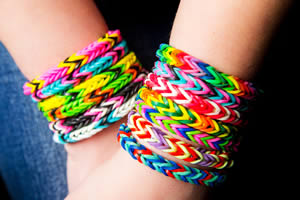
Rainbow loom bands are taking over the world. Literally. They are apparently one of the most popular trends since EVER, and the money-spinner of the moment for every discount store, toyshop and street trader. They are appearing in practically every playground in the world.

The Duke and Duchess of Cambridge have been photographed wearing them, as have David Beckham, Miley Cyrus and Harry Styles.

They are the eighth best-selling toy of all time on Amazon and a ridiculously cheap fad in comparison to XBox, DS games and other expensive computer games.

But these cheap and colourful little bands are taking over in more ways than one. Personally everywhere I look in my house and the garden I can guarantee I will find at least 20 loom bands. They get EVERYWHERE. They’re down the sofas, in the floorboards, drawers, bins, dishwasher, washing machine, in the dog… MILLIONS in the vacuum cleaner.

READ MORE HERE Written by Sophie Cross for http://www.careforkids.com.au

Dads Also Struggle with the Parenting Juggle

And younger male execs are taking a stand

An article in the Australian Financial Review recently highlighted the fact that while most emphasis is put on the daily parenting vs work struggle of mums, dads find it just as hard.

The AFR reported that Max Schireson from US database company MongoDB was stepping down from his role as CEO for “family reasons”. He will continue with the company in a more family-friendly vice-chairman position.

And when he said “for family reasons”, that’s just what he meant. In a blog he wrote:

“During that travel, I have missed a lot of family fun. Perhaps more importantly, I was not with my kids when our puppy was hit by a car or when my son had (minor and successful, and of course unexpected) emergency surgery”.

READ MORE HERE Written by Sophie Cross for http://www.careforkids.com.au

Dealing with autism in child care

What to do if you suspect your pre-schooler is Autistic

Autism, although not exactly common, is increasingly more known in our society. That’s not to say it’s been proven to be more prevalent than in previous years, but we’re getting better at diagnosing it.

Pretty much everyone will have a friend or relative with a child who suffers from autism, or Autism Spectrum Disorder, so called because of the huge range of difficulties and behaviours it encompasses.

These include difficulties with:

  • Social interaction (e.g. Seeming unaware of others and/or disregarding social conventions)
  • Social communication (e.g. Delayed or absent verbal language, and/or reversing pronouns)
  • Imagination (e.g. Having limited and unusual interests, and insisting on sameness).

The most commonly encountered children will be those with Asperger’s Disorder, which is widely regarded as “a lesser form of Autism”, but nonetheless on the scale and difficult to deal with as a parent or carer. In the case of Asperger’s there is no language delay, although communication difficulties still exist.

Despite rumours surrounding the MMR vaccine, which were subsequently laid to rest and dismissed as unsubstantiated scare-mongering, Autism is genetic. But there is still a lot about Autism that isn’t known. It varies hugely in symptoms and levels. It’s not curable, although some parents and autistic people have found ways of dealing with it and have successfully managed to live with and operate in society at a reasonably “normal” level. We use that term normal loosely of course. At the end of the day, with any child, what is normal?!

Autism is more prevalent in, though not exclusive to males.

It’s often hugely misunderstood. And the behaviour of the kids who are dealing with Autism is also often misread or mis-diagnosed.

Generally speaking, Autism is most likely to be picked up or diagnosed sometime after 18 months, which these days means that a child may well be in child care before, during and after diagnosis.

Frequently asked questions are:

  • Do autistic kids need to go into special care?
  • Are they able to attend a regular day care?
  • Do they need specially trained carers in child care?
  • What are the pros and cons of inclusive care?
  • What are the signs to look out for?
  • What do I do if I suspect my child might be autistic?

Children with autism can be included in regular child care situations, although carers should be trained in dealing with children with ASD. Not only can the normality of the situation help the kids with Autism, but also dealing with anyone with a disability of any type on a daily basis encourages tolerance, compassion and understanding. Qualities that cannot be underestimated in today’s society.

There are many ways children with ASD can be helped in a non-specialist child care facility:

For many autistic children, visualisation is key, particularly if they have language delay. Photos on lockers, pictures, faces and emotions, coloured indicators of areas and spaces are all very helpful to both autistic and non-autistic kids.

Defined areas are also great at helping physical structure and understanding of activities. Things like mats for specific areas, divisions, reading corners, mood boards and weatherboards – anything that helps define activities is very effective.

Changing norms and adapting behaviours are also key. Autistic children often find direct contact or lack of personal space upsetting. You don’t have to sit facing children, they can be told to sit side by side, which is much easier for an autistic child. Story time just has to be slightly rearranged. Expectations of certain behaviours changed.

Journalist Josie Gagliano, has a son, Rafael, who was diagnosed at 20 months. Here she recounts how she and her son’s child care service dealt with his particular needs.

C4K: Was Rafael already diagnosed with ASD before or after starting child care?

JG: No, he wasn’t yet, but I knew by then. He was 1 year and 8 months old when he started childcare, and I already had concerns. In fact, that’s why I put in child care one day a week, to help develop him further, and because they assured me they’d had children with special needs at the centre. My son was diagnosed with mild autism at age 2.

C4K: What were the early signs for you? Did you notice them or were they pointed out by someone else?

JG: My son would not respond to his name, and he previously had. That and the fact he stopped saying any words at all were my big signs. Plus, at playgroup, he would not join the other kids to play. Instead, he was happy to do his own thing.

C4K: How did your child care then address his and your needs?

JG: They had additional funding to cover an extra teacher at the centre, so she could concentrate on helping him. The other teachers were also on board and knew how to interact with him and how to get the best out of him.

C4K: Were there any issues while he was in child care and how did you overcome them?

JG: I always needed to ensure we were on the same page, working towards the same goals. This meant having meetings and checking in from time to time. Most of the time, things went smoothly, as we had extra funding to have an additional teacher at daycare to attend to his needs.

At his special needs-specific playgroup it was a different set up altogether: very much focused on his needs and strengths and weaknesses, and working towards improving social and play skills, as well as developing his speech via sessions, and occupational therapy sessions as well.

C4K: What advice would you give to parents who think their child may be autistic or who have just found out their child has ASD?

JG: The BEST advice is: get a diagnosis ASAP. And if your hunch is mistaken and your child is not autistic, then at least you will know – it could be an alternate concern, not autism, and you could address that instead. If there is an autism diagnosis given to your child, early intervention is key. Another very important piece of advice (said with love) is: Allow yourself a ‘mourning’ period, allowing yourself the time to be sad about the loss of your dream of a raising a neurotypical child. He or she will instead thrill you and bring you joy is so many other ways, and this new way of approaching your child, and recognising strengths and little triumphs will pull you through those first few months, and the years to come.

Find out more about Josie and her son’s journey and also more about dealing with Autism on her blog

First thing is to always consult with your GP as soon as you suspect anything is wrong. Second is to talk to your child care service and discuss issues with them. Don’t be worried that you won’t find child care; most centres are willing and able to help you.

For more information on Autism, check out the following websites:

www.autismspectrum.org.au

www.autismpartnership.com.au